After news broke that the Monarch butterfly had been put on the endangered species list, Michoacán cried foul. Not so! The migratory monarch population is doing just fine down here in Mexico, thank you. It’s all that herbicide up north, those hundreds of miles sprayed and denuded of all but corn and soybeans, and more corn and soybeans, not a bee or butterfly habitat in sight. (1)
Well, true about big ag on the US side decimating habitats of all pollinators, Monarch butterflies included. But the Mexico side is struggling, too. Monarch migrations are good business in Michoacán, a pillar of tourism in this no-beach region of Central Mexico. Tours to the Monarch reserves keep many a family fed. Guides, hotels, transport, restaurants — no one wants any hint that the spectacle of thousands of Monarchs glittering in the sun is getting any less, well, spectacular.
Yet global ag hangs like a chainsaw of Damocles over the pine forests in and around the Monarch reserves, too. The threat is not, most immediately, of herbicides, though that will come. Rather, quite simply, the big money is in big ag, not butterflies. Illegal logging, and ‘accidental’ fires clear the forests in preparation for avocado plantations controlled not by local smallholders, but by the big, often cartel-entwined producers growing for export. Growers earn up to four times as much for avocados sent to the US as to local markets — far more profitable than “preserving” forests for bugs, pretty as they may be. America needs its guac!
On this side of the border, though, unlike in the US, officials acknowledge the problem, and recognize causes. They at least talk about bolstering preservation programs and support for the people caring for the forests, even if actual delivery of funds and programs is questionable. (2)
In a major step to protect habitat, health, and indigenous agriculture, Mexico instituted a ban on GMO corn and glyphosate herbicide, way beyond anything achieved in the US. That ban, though, is being actively fought by chemical giant Bayer, who wants free rein to wipe out butterfly habitat here in Mexico as effectively as they have in the US. It is not at all clear that they won’t win in the courts.
Lots of blame, all tracing back to industrial agriculture spreading profit-first principles and environment-last practices around the world, with no accountability for the people, habitats, livelihoods, or food systems they uproot and displace in the process.
Two dismal stories hit the Michoacán news 24 hours apart, one about a Mexican court ruling, the other, butterflies. Neither referred to the other, though both are tightly connected to the displacements and damages of big ag.
Voz de Michoacán, July 20, 2022: The Mexican high court lifted Mexico’s ban on glyphosate herbicide and GMO corn seed, a big win for seed and chemical giant Bayer (formerly Monsanto).
Global headlines, July 21, 2022: The Monarch butterfly is officially an endangered species. Migratory monarchs travel thousands of miles to overwinter in the oyamel forests of Michoacán and the state of Mexico before returning north in the spring to their milkweed-rich breeding areas.
Both stories came along with news of extreme heat and fires in the US and Europe.
Of Corn and Butterflies
Up north, in the US and Canada, virtually all corn is produced as a global commodity crop using GMO seeds and associated glyphosate herbicides, planted as vast monocrop fields cleared and protected by glyphosate herbicides and mixes of insecticides. In all direction, fields and roadways run unbroken by trees, weeds, hedges, brush, or — yes, butterfly habitat. No shelter, no milkweed, no wildflower nectar or water, decades of pesticides, and the Monarch population is down 85% – 95% since 1990. That big-ag clear-herbicide-plant-spray system, once inhibited in Mexico by the GMO + glyphosate ban, is now getting a boost with the pro-Bayer ruling.
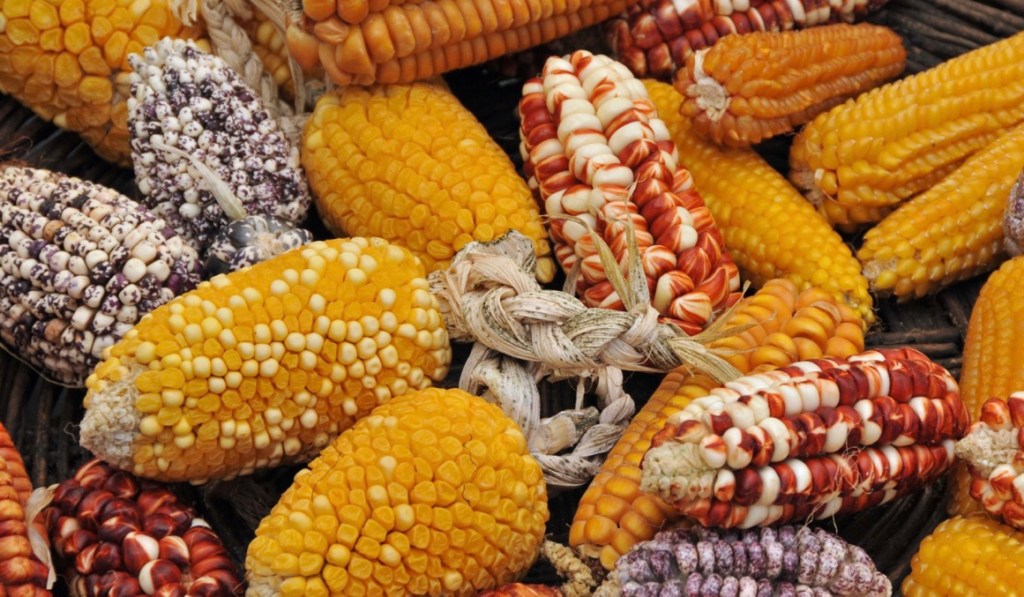
The no-GMO seed corn/no glyphosate decree passed in 2020 after years of activism by campesinos, food sovereignty, and environmental organizations pitted against global ag corporations and producers. The decree explicitly supported indigenous and campesino-local food and farming systems by protecting the gorgeous range of indigenous corn varieties from takeover by Bayer’s patented GMO seed + herbicide package of practices. Local corn varieties, adapted to niche environmental conditions, are severely threatened by GMO corn not only by direct replacement, but most critically by crossbreeding with indigenous varieties and wiping them out entirely.
Criollo (native) corn, NOT standardized, fits niches in local environments and forms the basis of local dishes from pozole to tamales, and even huitlacoche, a corn funguskilled off by pesticides.
Corn has been bred in Mexico for at least 2500 years, woven through Mexican life from the maize gods and goddesses of ancient Mayans and Atzecs, to today’s 60 varieties of local corn, and 6 corn tortillas per person per day (The average Mexican consumes about 336 kg of corn per year). It is the heart of Mexican history, culture, and cuisine. Sin maiz, they say, no hay pais. Without corn, there is no country.
Blue corn tortillas (my favorite!), threatened by cross-breeding local corn with GMO corn varieties
By promoting mono-cropping and big-ag, habitat-destroying practices, more smallholders and local producers will be driven out of farming. Ag-based cartel violence plays a part, as well. As the pine forests of Michoacán are illegally logged and cleared for lucrative avocado production and corn-based ranching, smallholders who sustainably manage forest and food landscapes for mixed food and income streams are forced to flee, abandoning fields and livelihoods. Food sustainability, independence, and regional food supply systems suffer. Small-holders leave, chemical use increases, butterflies are endangered.
Migratory Monarchs
Monarchs, like corn, live deep within Mexican and Michoacán culture. Butterfly imagery has appeared across Mexico for thousands of years, from Teotihuacan ceramics and murals (c. 0 – 600), to Aztec, Olmec, and Mayan jewelry, stonework and textiles, with associated spiritual beliefs, typically associated with death, and with the sun — life. Light and dark, orange and black, marking the inseparability of life and death, beating together.
Early in November, the Monarchs flutter into the high pine forests, folding into the trees and leaves for the winter, emerging briefly, brilliantly, to sip water and nectar in the sun of their not-too-hot, not-too cold mountain habitat. Their arrival coincides with both the corn harvest, and with Day of the Dead. The Aztec believed the souls of dead warriors returned as butterflies or hummingbirds; others associated the butterfly with the harvest, honoring the sun, and the sustenance of cycles of life. In parts of Mexico, the Monarchs are said to herald the arrival of the deceased, the butterflies embodying the souls of the dead returning home, guided by streams of Monarch-gold marigolds laid in doorways, glowing in the dark. In Michoacán, the Purépecha understand the ancestors to be ever-present in nature all around, eternally interweaving with the living through fire, air, and living creatures.
Here in Morelia, Michoacán, you see the orange and black butterfly image everywhere, including the jerseys of the Morelia Monarcas soccer team. Large areas of the forest reserves sheltering the monarchs sit in the eastern part of the state. Local people lead tours of the reserves during the migratory season, adding to and diversifying their income. Monarchs, and their overwintering forests, are no small part of the Michoacán tourism industry. “Monarchs on endangered species list” shakes Michoacán to the core.
The Fire Next Time
And climate change? Drought and extreme heat aggravate forest fires, with bigger areas burned across longer seasons, killing off not only the trees and brush, but also the insect and animal species living there. Short of fires, heat inhibits milkweed growth; warming is causing the milkweed range to diminish, and shift northward. Will the butterflies adapt? Will they be able to find milkweed along the way, and travel the greater distances? In Michoacán, will the temperatures still drop cold enough at night to trigger Monarch migration north, but not so much as to kill them? It’s not looking good.
The Monarch migration is one of the most wondrous on earth. Butterflies, like polar bears, are dramatic, sympathetic indicators of the ravages of climate change and habitat loss.
Agriculture generally gets a snooze. I saw nothing about the also-dramatic glyphosate-GMO-Bayer ruling in the New York Times. Yet that big-ag global behemoth wiping out butterfly habitats simultaneously batters human food-and-culture ecosystems, uprooting families, forcing them to give up, risk all, and try to migrate, like the butterflies, away.
This thank you note from a graduating son to his father has been making the rounds, tagged with #consumelocal.
Thank you for your support all these years, he says, and for teaching me never to give up. It all comes from this elote (corn) cart. Buy and eat from local stands and shops, he goes on. Even with a small purchase you’re greatly helping the economy of others.
True! Millions of people around the world support themselves and their families by selling food however they can: street food, carts, market stands, sitting in the doorway serving directly from their kitchen, or running around delivering loaded up plates and trays.
Here in Michoacán, there’s plenty of opportunity to buy local and support the small vendors. It’s not without contradictions, though. What about small-scale vendors of the imported junk food and soda that’s triggering soaring rates of diabetes, obesity, and heart problems?
It’s tough. If they’re not producers themselves, vendors have to buy what they can afford, and feel confident they can then sell it to others. And if that’s big-ag, big food Tostito’s and Coca Cola? I see this every day in Morelia. One side of the plaza, Michoacán gazpacho — diced fresh fruit of the season piled in a cup (yup, usually plastic), topped with lime, crema, chili. Other side, the very popular Mexican creation of Tostilocos — tear open the side seam of a little bag of Tostititos, then pile on the lime, salsa, jicama, chilies, mango, melted cheese, chicharrón (pork skin) — and carry a lot of napkins.
For my part, I say when you’re in the mood for the mess of that salty/sweet, crunchy/ soft, picant/mild, health-benefit-free combo, go for it — from a small stand, like from Luis’ father.
And the rest of the time, hopefully most of the time, pick up in-season fruits and veg from the local markets and street vendors. Try to get eggs, dairy, and meat from the small-scale vendors, too, who are sourcing from local producers.
It’s small, but nice to take the steps we can to free ourselves where and when we can from the big ag, corporate-controlled food systems.



 Uprooted