We need public markets now, more than ever
Markets have been in the news lately, in this corner of Michoacán. A few weeks ago, a nighttime fire destroyed the parking garage section of Mercado Independencia, the biggest public market in the Centro Historico of Morelia, only a 5 minute walk from my house. It’s my regular neighborhood market, and sad to see. About 150 vendors lost their stalls and merchandise. They’re now set up under tarps in adjacent streets, vying for territory with the ‘informales’, the folks that come to sell without paying for table space in the covered mercado itself. The area immediately around the burned structure is cordoned off, but no news yet on what happens next. Given years of protest about Independencia’s peeling paint, leaks and flooding, crumbling concrete, electric hazards and general decrepitude, hope abounds that this will trigger an overall rebuild.
In Patzcuaro, a Purépecha ‘Pueblo Magico’ an hour away, controversy simmers over the municipality’s plan to replace the rambling open-air tianguis market on Plaza Chica with a modern two-story concrete building. The regular vendors have already been moved to a temporary site to make way for construction, and the city just announced it will forcibly remove any informales who refuse to leave. Plaza Chica has been clogged up for weeks with people protesting from different angles. Some fear losing the centuries-old tradition of the Mexican street tianguis of tarps, tables, vats on stands and mats on the ground. Some question how the aesthetic can work. Many vendors are delighted with the prospect of washable concrete floors and electricity instead of muddy streets and dripping tents. Other vendors say it’s not big enough to accommodate all the regular sellers and the informales.
Both situations underscore the point that now, more than ever, we need to do all we can to protect, support, and reinforce the viability of municipal markets. And not just one big pubic market in a city, but several.
The key Mexican tradition to preserve is that of individual market sellers as the most personal, localized last step in the food supply chain, where mangoes, avocados, greens, chickens, cheeses, limes and tomatoes finally make it from producers large and small into someone’s hands, bags, and kitchens. Where venders visit, trade, and barter with each other, help each other out, sell a bit on behalf of their neighbors, do what they can to keep all their precarious livelihoods viable. They chat and banter with their regulars, most of whom walked there armed with shopping bags. Families pass the business on through generations.
I think about each of the markets I go to.

Market time
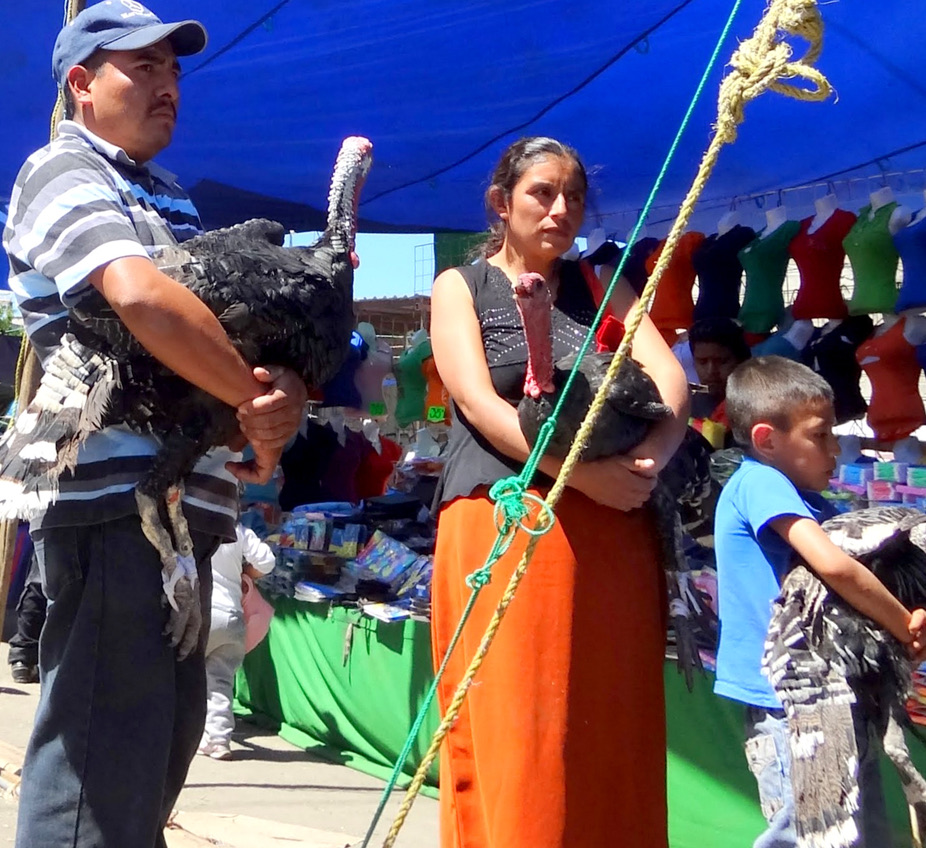
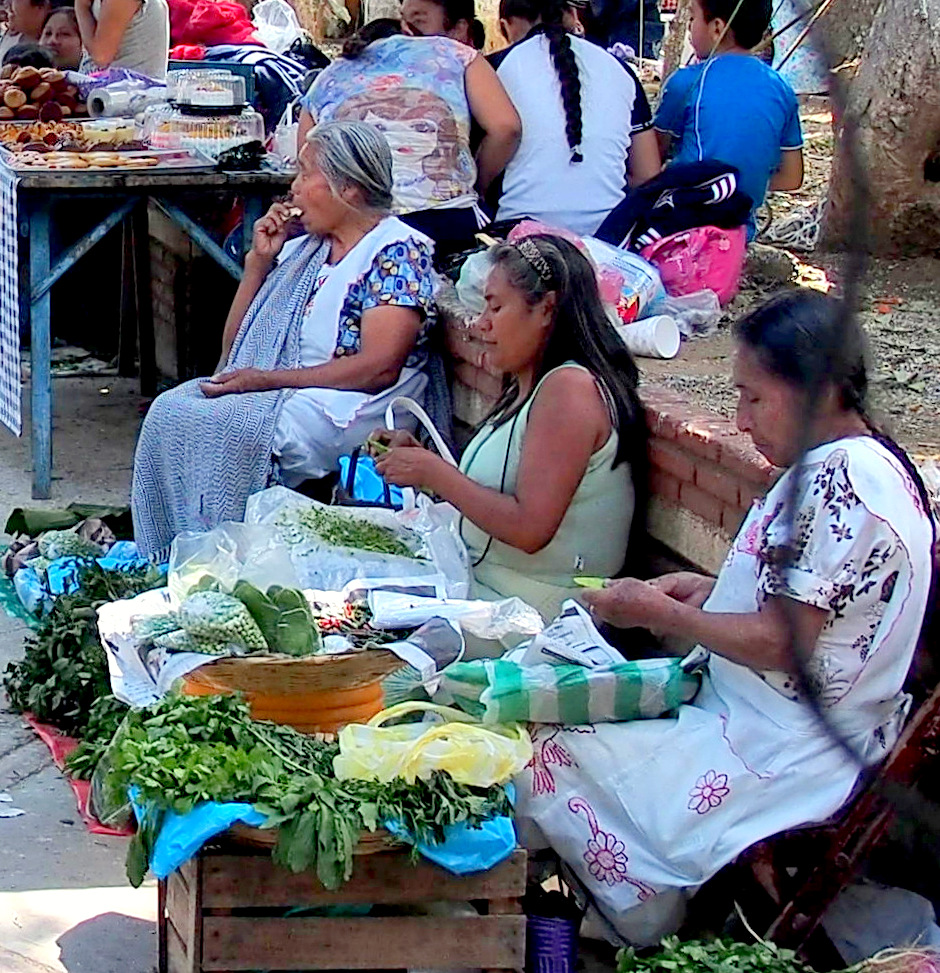
Sunday and Thursday are big market days at Independencia, meaning tianguis set up all around the main market building, itself a vast warren of stalls. I have to hunch down to make it under the tarps and ropes slung over rickety tables and across the single aisle that’s too crowded to do more than shuffle past tall sacks of corn, steaming vats of corundas, ground mats spread with tubers. Sellers are in from around the region: Patzcuaro women clean fresh fish, piling filets next to shiny skinned frogs legs, small bags of large crayfish, painstakingly gutted silverside charales. Men from the countryside squatt by heaps of edible roots; indigenous women hawk tamales; twine-tied bundles of greens. Avocados — the big Haas, bred for export, outnumbered by the thin-skinned little black criollo, ancestor of the Haas, out of favor in the market, but product of someone’s backyard trees. My friend Cristina refuses to go to Independencia. Too dirty and crowded, she says. But for another friend, Carlos, restauranteur and chef extraordinario, it’s the only place to go. After a couple of years I still find it intimidating, but I’m learning how to navigate, and I definitely have my regular cheese ladies. One sells from a tiny stand outside on tianguis days. On non-tianguis days, there’s Maria and her daughter at a table deep inside the main market building.
Sometimes I walk about 15 minutes over to mercado Nicolas Bravo, which everyone calls Santo Niño, after the church nearby. It’s much smaller, cleaner, and easier to shop in than Independencia. It really doesn’t have the selection of Independencia, but I like buying blue corn tortillas from the two wizened women who always hard-sell me into also getting their queso and squash blossom mini quesadillas. Mercado Revolution, commonly called mercado San Juan (it’s in that parish), is about 20 minutes walk across the Centro, so not really my neighborhood, but I go maybe once a week. San Juan is big – though not like Independencia — and many claim it’s the best quality in Centro. It’s always crowded but usually manageable, despite tourists and food tours pausing at every stack of yellow-footed chicken carcasses, mounds of leaf-wrapped corundas, or frenzied gazpacho fruit choppers.
Around each of these markets informales sell from buckets in the back of a truck, sit on a low stool by a basket of plums, perch against a wall with a tray of gelatinas, call out to sell a few plastic cups of blackberries or wild mushrooms, wait with a turkey or or two to sell.
Shopping this way takes time, a different type of time, and effort. Unrushed. In contact with other people. Physical, carrying bags, navigating spaces. Following norms. Waiting for a seller to find something; waiting for them to find change; waiting for them to finish a conversation. For me, gringo newcomer, add in the challenge of deciphering norms and practices, learning what various lumps and liquids and leaves are, and what to do with them.
Faster, less personal, more familiar alternatives are out there. Costco, Sams Club, Walmart, gourmet supermarkets and malls surrounded by parking lots all beckon from the outskirts of town. Even if I had a car, I know it would take longer to drive and park and shop than it does to go to any of my mercados. But they’re clean and light, you don’t get dripped on when it rains, there are carts and cars so you don’t have to lug your stuff around, produce is wrapped and shiny, packaged food comes supersized, you can find everything and more all in one place. That’s the competition to the municipal markets. Not trivial. Suburban box stores have hollowed out towns and decimated local markets around the world. May it not happen here.
Resilience, sustainability
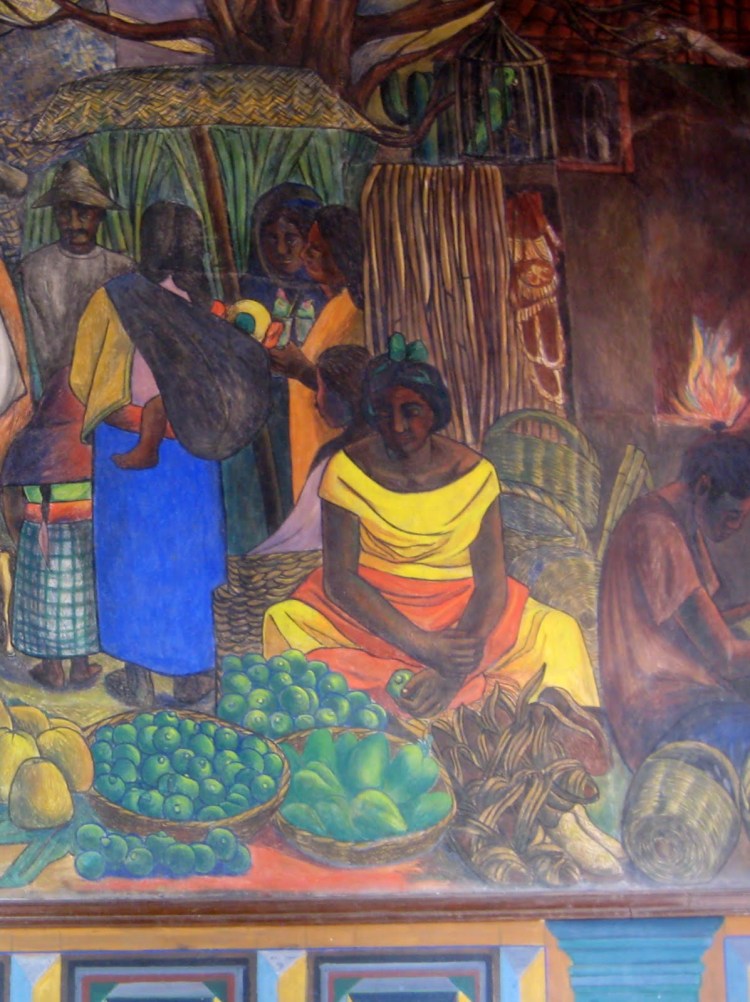
Cortez admired the vibrant, overflowing indigenous markets of Tenochtitlan 550 years ago. Mexican ceramics, arts, and murals through today reflect local markets as heart and soul of Mexico. As each neighborhood has its church, so it has its market, often even sharing the saint’s name, a community hub of connections, relationships, and supports across families.
To the anti-new mercado people in Patzcuaro, I’d say: embrace the fact that the city in investing in the municipal market! Yes, certainly, fight to ensure equity in creating and allocating space, and keeping it affordable and accessible for vendors at all scales. Even as a building instead of tianguis, the new market will continue as an outlet for small producers and makers who can’t sell to the supermarkets, a source of work and, for many, an opportunity for supplemental income. Without smaller, viable local markets, small producers cannot survive. Markets need buyers to come there instead of going to Walmart! Making it easier for vendors to set up, display, maintain quality, and keep everything clean makes it easier and more pleasant for shoppers to shop. The proposed design for the new Patzcuaro market also keeps the tradition of market as social center, with breezy and green interior courtyards for abuelas and grandkids, parents and babies, visitors and locals to gather, eat, sip chocolate, play, and pass pesos over to the guitar player.
And to the government of Morelia: get on it! Rebuild as much as you can, as soon as you can. Get input from buyers and sellers alike, and redo the entire thing.

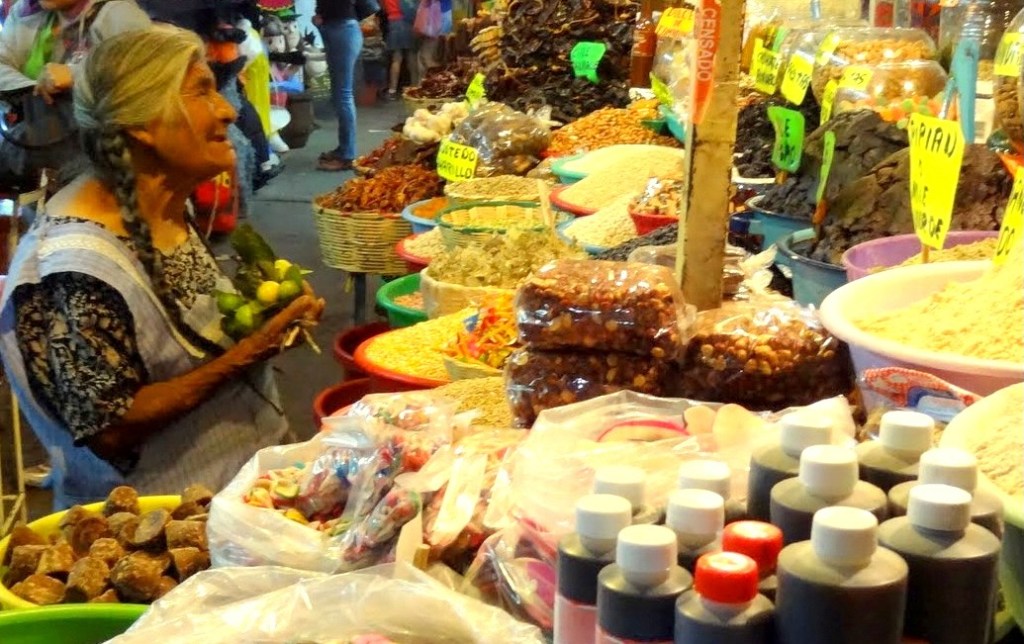

Some producers and products can sell only at the local scale. Rather than being inefficient, it creates resilience in the system.
Our food system now is global, rife with weaknesses that came to the fore with the covid pandemic, from production, to manufacturing, transport, selling and buying. Climate change is forcing a new reckoning. Temperature extremes, fires, and drought will shift food production regions, patterns, crops, and products. Like people, livestock and marine species respond badly to extended periods of high temperature. Worldwide reliance on monocropping with only a few plant varieties, bred for narrow environmental conditions, has created new vulnerabilities. Decreased production or failures may occur in many regions at once. Global systems cannot respond or adapt quickly.
Now is the time to build resilience at regional and local levels. Strengthen the smaller systems, the shorter supply chains, the diversified, sustainable, less fossil fuel-centric.
Local markets are not only the heart and soul of Mexico. They are central to a sustainable future.
 Uprooted