US ag interests smother Mexico’s attempt to control its food system, protect biodiversity, the environment, and rural communities
Threat by threat from US agriculture, Mexico has been compromising on its ban on importing GMO corn and glyphosate1. Mexico’s most recent offer radically undermines their original goals. Mexico made a bold and courageous move to reclaim its food system and reduce the damaging impacts of global industrial agriculture. It looks like it won’t be allowed to go ahead.
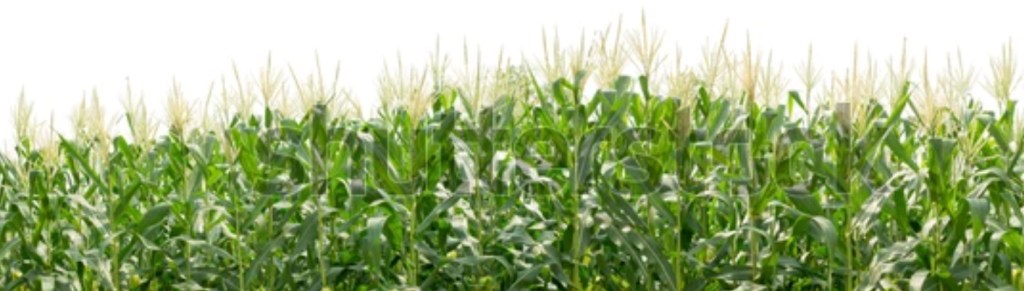
When first announced, the rationale and aims of the decree2 and ban were multidimensional, grounded in sustainable development, and taking the approach of the ‘precautionary principle’3 around use of agrochemicals. They included preserving bio-cultural diversity, specifically, protecting roughly 60 landrace (local) corn varieties; advance self-sufficiency and food sovereignty; and preserve and advance culturally relevant, sustainable, agro-ecological practices. Drawing on evidence from Europe of health risks of glyphosate to humans, pollinators, and other negative environmental impacts, glyphosate — typically bundled with use of GMO corn seeds — would also be banned.
The US cried foul, citing the US-Mexico-Canada trade treaty (USMCA) and massive economic fallout, while slapping on the fig leaf of “not based in science.” This triggered the first compromise from Mexico: pushing the implementation date of the ban from 2024 to 2025, with ‘further studies’ to take place.
The US continued to threaten action under USMCA, unless the ban was dropped completely.
The second yield from Mexico modified and reduced the scope of the ban by differentiating between types of corn, one type to be exempt from the ban, the other subject to it. This is problematic, from scientific, practical, social, cultural, and environmental standpoints, but ok, let’s follow it and see where it’s going.
The ban, Mexico offered, would apply only to yellow corn, which is the bulk of what the US produces — virtually all of it GMO — used for animal feed and fuel. 95% of US corn exports to Mexico are yellow corn, fattening beef, pigs, chickens to meet Mexico’s growing demand for meat.4
White corn, used for human consumption, including tortillas, would be subject to the ban. This, supposedly, would keep GMOs out of the food chain, except indirectly, via animals, and would, ostensibly, protect the landrace species, though pollen blows and can cross fertilize. Concurrently, the government is implementing policies and programs to boost its white corn production and support small- and medium producers, thereby also advancing goals of rural development, reduced dependence, and food sovereignty.5
Not good enough, says the US. “”No, there’s no reason to compromise,” [US Secretary of Agriculture] Vilsack told reporters. Vilsack said he understood Mexican President Andrés Manuel López Obrador’s “concern about the heritage and culture of white corn in Mexico,” but he also stressed the need to adhere to science and commitments made under trade deals.”6
Only about 5% of US corn exported to Mexico is white corn, but that adds up to a lot of tonnage and a lot of dollars. Mexico imports about 17 million tons of corn from the US every year; 18% – 20% of it is white corn, destined to Mexico’s food processors and tortilla makers.7 This is the 20% that AMLO is trying to cover and substitute with Mexican-grown, non-GMO corn.
No, no ban at all, is the US position. “The message is quite simple; we believe in a science-based system. We understand and appreciate some of the challenges President López Obrador has outlined but at the end of the day, the agreement we reached with Mexico and Canada is in support of a science-based system,” Vilsack said.8 Biotech industry group BIO said it appreciated U.S. efforts to get Mexico to “maintain a science-based risk regulatory system.” 9
There’s that ‘US=science, Mexico=not science’ trope, again. This from climate change, election, and fact-deniers. Nothing to do with money or agricultural imperialism (which is about money). It’s the principle.
The most recent cave-in, however, gives away the farm. Literally.
Mexico would allow GMO white corn to be imported, but bar domestic food companies from using it to make tortillas. Just domestic. Just tortillas. That sounds a lot like no ban on GMO corn imports, white or yellow, for almost any use. And non-Mexican companies can make tortillas and any other food products from imported white, GMO corn. But wait: more paternalistic posturing from the US adds insult to injury.
“When it comes to white corn and acceptance by Mexican tortilla makers and consumers, Vilsack said the Mexican government should let the free market decide. “And I’m reasonably certain that the (Mexican) market down there is going to want white corn produced by Mexican producers,” he said. “That’s non-GMO for their tortillas and that’s what the market is saying. And so the market will respond to that.” 10
Really? When inexpensive GMO white corn comes in, people will pass it up in favor of more expensive Mexican white corn? They’ll buy more expensive tortillas because they’re labeled non-GMO? “Non-GMO” may garner higher prices at Whole Foods, but when people count every peso, they can’t afford to go eco, even if they may want to.
In 2022, US white corn was $220/metric ton. Mexican white corn, $306 (2019). How’s that going to play with Mexican local producers and markets? There are 1.5 million corn farmers in Mexico, one third of them in Chiapas, Oaxaca, and Puebla, planting an average of 9 acres of corn, relying on rainfed systems, yielding around 2-3 tons per acre. One third of Mexico’s corn is irrigated, on larger farms up in Jalisco and Sinaloa, where they get about 10 tons per acre11. In the US, the average is 250 acres of irrigated corn planted per farm, with yields around 12 tons per acre. What’s going to happen to local corn production, when imported white corn moves in?
When I worked in Nevis, in the West Indies, the local market had recently become flooded with carrots flown in from Miami — cheaper, straighter, and brighter than the gnarly local carrots. Island farmers could no longer sell their carrots, even though locals agreed the Miami ones were watery, tasteless, and lacked “strength.” But, shrug, the imported one’s are so much cheaper. And of course the hotel and tourist industry — mostly foreign owned and operated — bought the pretty (and cheaper) ones from Miami. And that was it for local producers, another source of income wiped out by global agriculture12.
The counter argument is, of course, great! Corn-based products will be cheaper for all! But will they? What of the farmers who can no longer afford to stay on their land? What of the social, cultural, and environmental impacts, and associated costs? The communities who can no longer survive? What of food security versus dependence on — and vulnerability to — external producers? Why not build up local production with better price supports, better services, and better markets and marketing? Why not act more aggressively to control consumer prices? Bringing in cheap and driving out local creates dangerous ripple effects.
Better strategies are needed to develop affordable, sustainable, and equitable food and agriculture systems. Mexico deserves kudos for trying to take important steps. The US win on this one clearly demonstrates how the power of US corporate interests and global industrial agriculture is, and will continue to be deployed, despite well-established scientific evidence of the wide-ranging damages caused.
(1) https://www.nongmoproject.org/blog/mexicos-gmo-corn-ban-aims-to-protect-cultural-heritage/. https://www.bbc.com/news/world-latin-america-63793651
(2) Initial decree December 31, 2020, in Spanish: https://www.dof.gob.mx/nota_detalle.php?codigo=5609365&fecha=31/12/2020#gsc.tab=0
(3) From the Rio Declaration, 1992: In order to protect the environment, the precautionary approach shall be widely applied by States according to their capabilities. Where there are threats of serious or irreversible damage, lack of full scientific certainty shall not be used as a reason for postponing cost-effective measures to prevent environmental degradation.
1998: When an activity raises threats of harm to human health or the environment, precautionary measures should be taken even if some cause and effect relationships are not fully established scientifically. In this context the proponent of an activity, rather than the public, should bear the burden of proof.
(4) Reducing corn fed livestock production and consumption is one way to reduce dependence on corn imports, but the idea of reducing meat production and/or consumption is not discussed. That may change, though, as the concept of “peak meat” develops, and one European country — the Netherlands — has taken dramatic steps to reduce beef production. https://www.theguardian.com/environment/2023/jan/16/netherlands-european-union-regulations-livestock
(5) As of Jan 15, Mex initiated an export tax of 50% on white corn, to try to keep more in-country and reduce imports. https://mexicobusiness.news/agribusiness/news/mexico-announces-temporary-50-tax-white-corn-exports
(6) https://www.agri-pulse.com/articles/18695-vilsack-no-compromise-with-mexico-on-gm-corn January 9, 2023.
(8) https://mexicobusiness.news/agribusiness/news/mexico-cannot-be-forced-import-us-gm-corn-study-says
(10) https://www.agri-pulse.com/articles/18695-vilsack-no-compromise-with-mexico-on-gm-corn
(11) https://www.wilsoncenter.org/article/corn-mexico-and-us https://migration.ucdavis.edu/rmn/blog/post/?id=2407#:~:text=Mexico%20has%20about%201.5%20million,or%20nine%20acres%20of%20corn.
(12) Food imperialism in the Caribbean goes back hundreds of years, with plantation, slave-dependent export-agriculture eroding local food production, and later, eliminating economic options for formerly enslaved people.
 Uprooted