Food sovereignty battle on, right now: US Agriculture threatening Mexico over Mexico’s looming ban on importing US-grown genetically modified (GM) corn, and use of its companion herbicide, glyphosate. Mexico wants to control the planting and import of GM corn that’s been engineered to work with glyphosate. The US wants unrestricted ability to sell its GM corn and farm chemicals to its biggest buyer. Mexico talks sovereignty, food security, indigenous culture, health, climate change, biodiversity. The US talks economics, waves the banner of “feed the hungry!”, then hauls out the big weapon, the USMCA (formerly NAFTA) trade treaty[1]
Tensions hit high in 2020, when Mexico President Andres Manuel Lopez Obrador (AMLO) issued a decree stating that Mexico would phase out the use of GM corn and glyphosate by the end of 2024.
…to achieve self-sufficiency and food sovereignty, our country must focus on establishing a sustainable and culturally appropriate agricultural production, through the use of practices and agroecological inpuuts that are safe for human health, the country’s biocultural diversity and the environemtn. as well as congruent with the agricutlral traditions of Mexico.
The problem is, 90% of US corn is from GM seed, helped along by chemicals from global agri-giants Bayer, Syngenta, DuPont. And Mexico is US corn’s biggest buyer, spending $4.7 billion on corn in 2021, not trivial to US big ag, and growing.
Team US: GMO Corn vs Team Mexico: Food Sovereignty
As the ban-date approaches, team USA/GM is crying foul from the silo-tops, lining up obstacles, and drawing battle lines using the US-Mexico-Canada trade agreements. US Secretary of Agriculture Tom Vilsack, representing the “deep concerns” of US big ag corn growers and agro-chemical giants, is warning Mexico that the US will take formal steps to enforce legal rights under the US-Mexico-Canada free trade agreements. The stakes? The World Perspectives analysis (2) estimates that the Mexican ban would result in an economic loss to the US of $3.56 billion the first year, rising to $5.56 billion the second year, adding up to a loss of $73.89 billion in economic output over ten years, and a contraction of $30.55 billion to Gross Domestic Product. Interestingly, the analysis also indicates that over 10 years, the non-GM corn sector in the US would expand and grow (my emphasis) in response to the big Mexican market.
On the other side, Mexico says nothing obliges them to purchase specifically GM corn from the US, so why not agree on replacing the GM with corn with non-GM corn? Mexico is considering direct agreements with farmers in the US, Argentina, and Brazil for non-GM yellow corn, and reportedly, some US farmers are ready to switch to non-GM corn to sell to a market as lucrative, and growing, as Mexico. This is opposed, of course, by the big ag industry giants, who cite a host of structural obstacles. The obstacles could be overcome, say the non-GM growers, but the will and power is not there to do so.
López Obrador insists that his country is under no obligation to import genetically modified crops under the treaty. “When deciding between health or trade, we opt for health,”
All corn, or just people food?
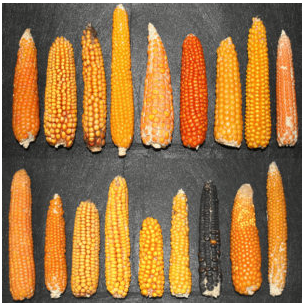
Then there’s the back-and-forth about which corn, for what. Virtually all corn Mexico imports from the US is GM yellow corn for livestock feed and manufacturing (such as high fructose corn syrup, cereal, sauces).
Corn for tortillas, roasted corn on the cob, and other sweet-corn dishes, is pretty much home-grown, and non-GM, with only about 3% imported from the US — a small percent, but still economically significant at over 700 tons per year. But while Mexico has indicated the ban might apply only to corn for direct human consumption, they have not ruled out banning all GM corn and derivative products.
For and against
Critics of the ban, such as Mexico’s National Agricultural Council, align with their US counterparts, arguing AMLO’s anti-biotech stances and policies will result in higher prices for Mexican consumers.
Supporters say global markets, including the US, would shift toward producing more non-GM corn — a net win for the environment — and Mexico could meet its needs for non-GM corn importing from other than the US, and from US farmers who switch to non-GM corn. The US fears that might be true, causing further losses for the majority GM corn growers, even as markets expand and sales increase for non-GM corn.
Much of the support from the ban comes from the less mass-industrialized ag sector, particularly indigenous populations trying to protect heritage varieties, rural community livelihoods, local agro-ecosystems, and health.AMLO’s food security policies also include trying to ramp up domestic production, with help targeted to small and medium-scale producers.
Big ag winning
Where does it stand now? Mexico, the environment, food sovereignty are caving.
AMLO’s offer: delay implementation of the ban to January, 2025, so US corn growers can plan, purchase seed, plant, harvest, and sell the 2022 crop of GM corn without slamming into the 2023 ban.
Mexico also agreed to reconsider its analyses and rejections of GM corn traits in seeds, and allow imports of GM feed corn.(3)
And the “wont-cross-that-line” corn for human consumption? Allow it, but bar domestic food companies from using it to make tortillas or other products.(4) Easy to see that’s not going to end well for Mexicans who want control over their corn and food system.
GMO corn and glyphosate bans came from the long struggles of local and regional campesino and small-holder producers, indigenous communities, environmentalists, climate activists, and their partners in the fight for cultural, agricultural, and food sovereignty. (5) Their efforts to wrestle Mexican food and agriculture back from the control of US big ag are not being met on the national level. AMLO is using the right words. Transformation demands actions that match.
(1) https://ustr.gov/trade-agreements/free-trade-agreements/united-states-mexico-canada-agreement
(2) All economic figures from The World Perspectives analysis
(3) https://www.agri-pulse.com/articles/18632-mexico-offers-new-alterations-to-decree-banning-gm-corn
(5) See, for example, Via Campesina, and projects
 Uprooted