Greenwashing stories of ag science

No, this isn’t a poster from the ’50’s, when just maybe, you might have seen a farm like this in the US.
It’s a full-wall poster on display right now, December 2022, at the US Botanical Gardens in Washington DC, part of an exhibit called “Cultivate: Growing Food in a Changing World” exhibit. I was excited to check it out, especially given the subtitle text: “Agriculture impacts everyone’s daily life and not just because of the food we eat. Explore the galleries and gardens to learn how inventive ideas in agriculture, both scientific and social, sustain and enrich life… ” Great!
Note: I LOVE the Botanical Gardens. They do wonderful work in urban agriculture, education around food and medicinal plants, plant history, ecosystem education, conservation, and species diversity and protection. And it’s my favorite walk destination when I’m back in DC, with fascinating outdoor gardens and peaceful nooks year-round.
But this exhibit unabashedly perpetuates the myths of agricultural science and innovation as unquestionably, neutrally beneficial. Right at the entry, this wall-sized poster, headlines greenwash buzzwords “steward” and ‘ecosystem,” implying food comes from places like the image: mixed farms, with hedgerows for diverse pollinators, a small herd of animals on pasture (sheep? really?), fallowed fields, and a flowing brook for conscientious irrigation, with farmer making decisions based on eco-stewardship more than cold, hard markets.
This mixed-farm, red barn, fluffy sheep image continues to grace story books and public imagery, long after becoming completely defunct in the US. Picture of endless monocrop fields, the display of corporate ag takeover, are boring. And who wants to see feedlots instead of fields, much less what’s behind packets of meat at the store?
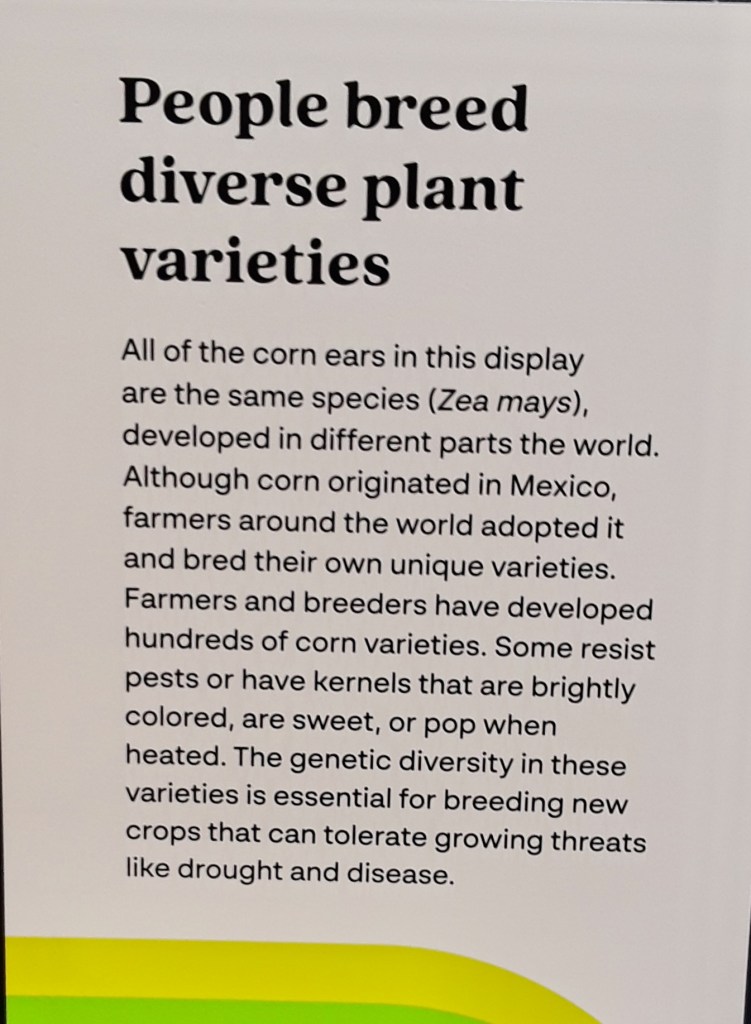
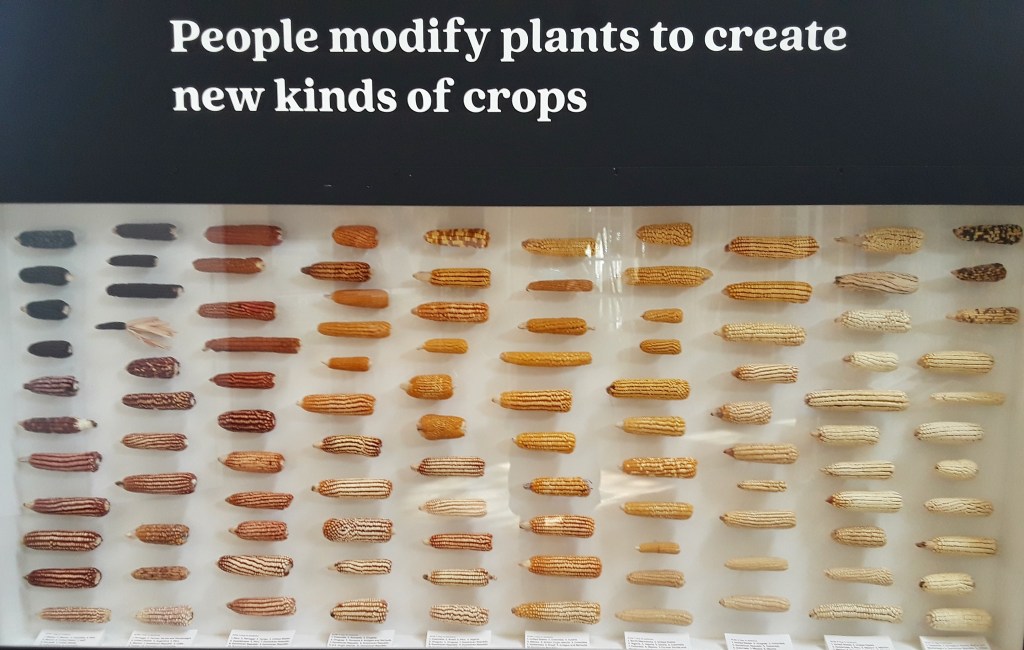
Another display continues the mythmaking: the idea that farmers maintain biodiversity through localized plant breeding. People breed and modify?
Four multinational corporations — Bayer-Monsanto, Syngenta, BASF, and DowDuPont — control 75% of plant breeding research, 60% of the commercial seed market, and 76% of global agrochemical sales.
When farmers purchase GMO seed (90% of corn and soy in the US), they enter into a contract agreeing to purchase new seed each year. They’re not allowed to save and plant the seed for the following year, much less use it to breed new varieties.
The concentration of corporate agri-food power — of not having people able to make choices and changes for better, more secure food supplies — threatens food systems worldwide.
Perhaps the educational text of this exhibit is meant to be aspirational, planting the right general ideas more than representing complex reality. If so, it would be helpful to say so. Point out obstacles to sustainable agriculture and equitable food systems. Follow with posters about organizations and practices in the US and elsewhere that really do entwine food production with principles of ecosystem stewardship and diverse, equitable, sustainable food and farming systems, like regenerative agriculture, agroforestry and agroecology, food sovereignty and food justice.
 Uprooted
Leave a comment